Stop Maintaining the Past. Start Building the Future.
The real question isn’t whether your organization needs to modernize.
It’s where to start and how to ensure every Dirham invested delivers measurable business value.
Today’s business leaders face a difficult reality: legacy technology is quietly draining growth, increasing risk, and limiting innovation.
The Cost of Standing Still
Across industries, organizations are discovering that outdated systems are no longer just an IT problem they’re a business problem.
- Nearly 70% of enterprise software is more than 10 years old, while the pool of experts capable of maintaining these systems continues to shrink.
- Between 60% and 80% of IT budgets are consumed by maintaining legacy infrastructure rather than funding innovation.
- Technical debt, security vulnerabilities, talent shortages, and fragmented decision making continue to accumulate, creating hidden costs that compound over time.
Every year spent postponing modernization increases the gap between what your business can do today and what it could achieve tomorrow.
The challenge isn’t deciding to modernize.
The challenge is knowing what matters most.
Modernize What Creates Value
Many organizations fall into the trap of attempting to modernize everything at once.
The result?
Expensive transformation programs, cloud migrations without clear business outcomes, and technology investments that fail to generate meaningful returns.
Successful modernization follows a different path.
It focuses on the systems, processes, and capabilities that directly influence growth, customer experience, operational efficiency, and competitive advantage.
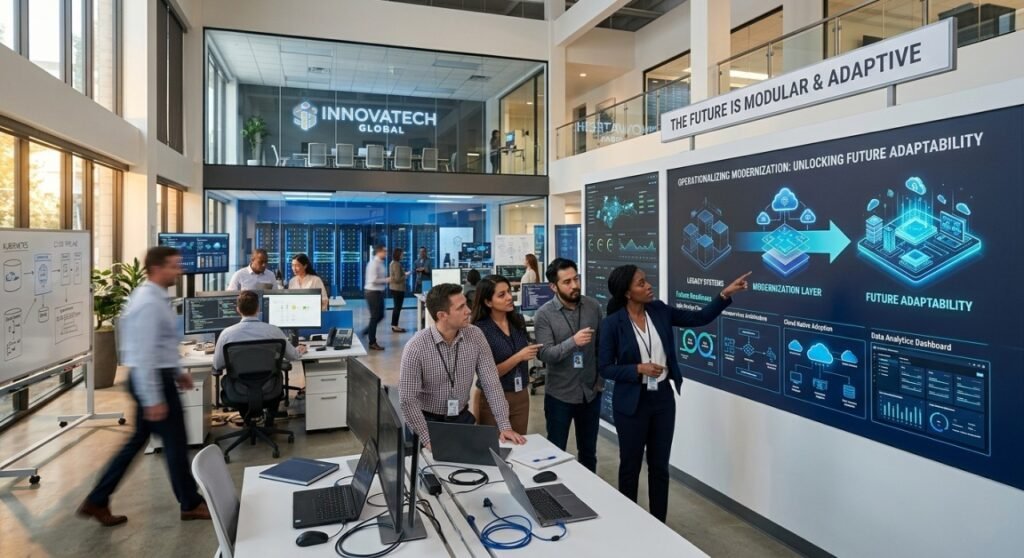
Modernization isn’t simply replacing old technology.
It’s reimagining how your organization operates.
It’s creating the foundation for AI powered decision making, intelligent automation, realtime insights, adaptable workflows, and entirely new business models.
In short, modernization is how organizations prepare themselves for the next decade not just the next upgrade cycle.
The Momentum Is Already Here
Forward-thinking organizations are moving quickly:
- 60% of CIOs now rank modernization as their highest strategic priority.
- 75% have already completed targeted modernization initiatives.
- 18% report achieving continuous modernization capabilities.
- 87% say modernizing critical applications has created measurable competitive advantages.
The organizations winning today aren’t necessarily spending more.
They’re spending smarter.
Where Leading Organizations Start
The most successful modernization programs begin with business-critical capabilities that unlock immediate value.
Financial Services
- Core platform modernization
- Customer 360 initiatives
- Regulatory and compliance automation
Retail & Consumer Goods
- Omnichannel fulfillment
- Demand forecasting
- Inventory optimization
Healthcare
- Clinical decision support
- Unified patient data platforms
- Telehealth transformation
Manufacturing
- Equipment failure prevention
- Production optimization
- Quality traceability and recall readiness
Technology
- Product platform consolidation
- Unified customer data
- Release risk detection and automation
Energy & Utilities
- Grid resilience
- Asset performance optimization
- Forecast-driven operations
Media & Communications
- Personalized customer retention
- Real-time advertising optimization
- Rights valuation and intelligent bidding
Organizations that prioritize these high impact areas can eliminate bottlenecks, automate inefficiencies, and accelerate growth while creating a foundation for future innovation.
Modernization Is a Leadership Strategy
The most important shift leaders must make is viewing modernization as more than a technology project.
Technology may enable transformation, but leadership drives it.
True modernization empowers organizations to redesign processes, enhance customer experiences, unlock workforce productivity, and respond faster to market changes.
It creates adaptability.
It enables innovation.
And it ensures your organization is prepared for opportunities that don’t even exist yet.
The businesses that thrive tomorrow won’t be those that simply upgrade their systems.
They’ll be the ones that use modernization to reinvent how they create value.
The future belongs to organizations that modernize with purpose and start now.